
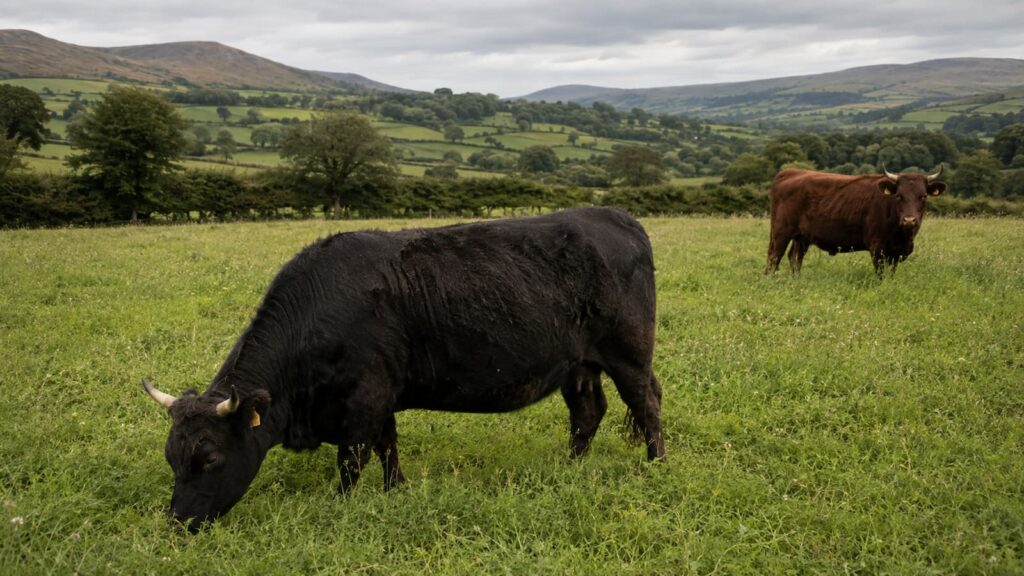
Good beef takes time. At One Dexter, my aim is not to produce cattle as quickly as possible. I want to raise slow-grown pasture-fed beef from animals that mature naturally, follow the seasons and spend their lives eating the food cattle evolved to eat.
That approach is less about maximising output and more about giving each Dexter the time it needs to develop naturally.
Modern beef production often rewards speed
In conventional beef production, efficiency matters. An animal that reaches its target weight sooner requires fewer days of land, labour and management before it can be sold.
There are understandable economic reasons for that. However, speed is not the measure I want to optimise above everything else.
I do not see cattle simply as machines for converting feed into kilograms of beef. They are living animals within a grazing system. Their growth should reflect the land, the forage available and the changing seasons.
Dexter cattle are well suited to a forage-based system
Dexters are small, hardy native cattle with a long history of thriving in relatively demanding environments. They are well suited to systems where cattle are expected to make good use of pasture rather than rely on large quantities of concentrated feed.
That is one of the reasons I chose them.
My aim is for One Dexter cattle to grow and finish on pasture and, where necessary, conserved forage. I am not interested in using grain simply to accelerate the final stages of growth.
Pasture does not grow at the same rate all year
A genuinely pasture-led system is seasonal.
Spring grass is different from midsummer pasture. Autumn grazing is different again. During winter, I intend to make as much use as possible of deferred grazing: pasture deliberately rested and carried forward from the growing season. Hay or haylage may still be needed at times, but my aim is to minimise that reliance wherever the land and weather allow.
The animals respond to those changes too. Their rate of growth will naturally vary according to the quality and quantity of forage available.
Rather than fighting that seasonality, I want to work with it.
Can beef have terroir?
There is a concept borrowed from wine that I think is useful here: terroir.
Terroir describes the influence of place on food. In beef, that can include the soils beneath the pasture, the plants growing there, rainfall, altitude, season and the way the land is managed.
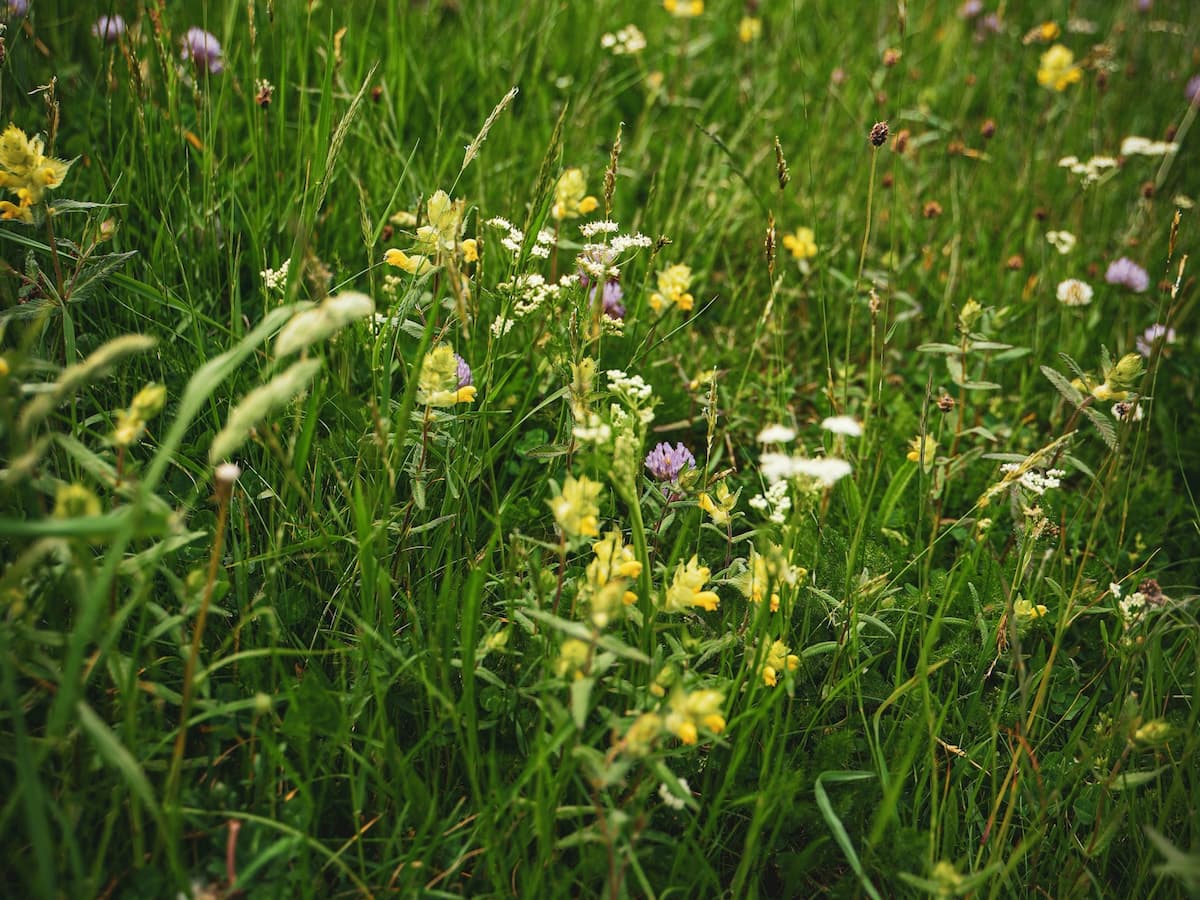
A Dexter grazing a diverse Cumbrian pasture is not simply consuming generic “grass”. It is eating a particular landscape at a particular moment in the year.
That pasture might contain grasses, clovers, herbs and other broadleaved plants. Depending on the land, cattle may also browse hedgerows, scrub and tree leaves.
Diet, age, breed and management can all influence the characteristics of beef. Research is increasingly exploring the idea of terroir in beef, including how breed, diet, pasture composition and environment can influence flavour-related characteristics. I would not claim that terroir determines flavour in exactly the same way the term is commonly used in wine, but I think the underlying idea is important.
The animal, the landscape and the food are connected.
I find that fascinating. Rather than trying to erase seasonal and geographical differences through a standardised finishing ration, I want my cattle to reflect the land they have lived on.
For someone following one individual Dexter, that connection can become especially tangible. You will be able to know not only that the animal was pasture-fed, but where it grazed and how its diet changed as it moved through the seasons.
Slow-grown pasture-fed beef allows cattle time to mature
Age alone does not determine beef quality. Breed, diet, genetics, management, body condition, handling, slaughter and maturation after slaughter all matter.
However, allowing cattle sufficient time to mature can contribute to the development of the characteristics I value in beef.
I am particularly interested in flavour, good fat cover and an animal that has reached an appropriate level of maturity without being pushed there through intensive feeding.
For Dexter cattle raised entirely on forage, that may mean taking considerably longer than the fastest possible production system.
I am comfortable with that.
I would rather finish cattle with the seasons
I do not want an animal’s slaughter date to be dictated simply by reaching a particular birthday.
Body condition matters. So does the individual animal. The quality of the pasture matters too.
Where possible, my preference is to finish cattle when they are naturally carrying the condition I want, ideally at a point in the grazing year when the pasture has helped them reach that condition.
That might mean waiting.
It might also mean that two animals born at roughly the same time are not ready at exactly the same moment.
Individual animals develop differently, and I think there is value in acknowledging that.
A longer life has a cost
Keeping cattle for longer is not free.
Every additional month requires land, fencing, water, forage, husbandry and daily responsibility. A slower-growing animal also ties up capital for longer before any beef is sold.
That is one reason truly extensive, slow-grown pasture-fed beef should not be compared with commodity beef purely on price.
The systems are trying to achieve different things.
My priority is not to produce the cheapest kilogram of beef possible. It is to produce exceptional Dexter beef from animals whose lives and management I am proud to show my customers.
A good life matters as much as the final product
There is another reason I do not want to rush my cattle.
At One Dexter, the life of the animal matters.
If an animal ultimately provides food for us, I believe there is value in making the years before that point as good as I reasonably can.
That means access to pasture, space to express natural behaviour, appropriate companionship, good husbandry and management centred on the animal rather than simply on production targets.
The beef matters. But so does everything that happens before the beef exists.
You will be able to follow that process
This is where the One Dexter model becomes different.
When you reserve beef from an individual Dexter, you will not simply receive a box at the end of an anonymous supply chain.
You will know which animal your beef comes from.
You will be able to follow its life, see where it grazes, understand what it eats and learn how it is managed as it grows and matures.
You will be able to see the landscapes that helped raise it and understand how those landscapes changed through the year.
And if that process takes a little longer than industrial efficiency would prefer, you will understand why.
Some things should not be hurried
I am not opposed to efficiency. Waste is neither economically nor environmentally sensible.
But efficiency should be a tool, not the entire purpose of farming.
With One Dexter, I want to give cattle the opportunity to grow at a pace that suits the animal, the pasture and the season.
No grain-fuelled race to slaughter. No arbitrary obsession with reaching a target as quickly as possible.
Just hardy Dexter cattle, good pasture and enough time to let both do what they do best.