
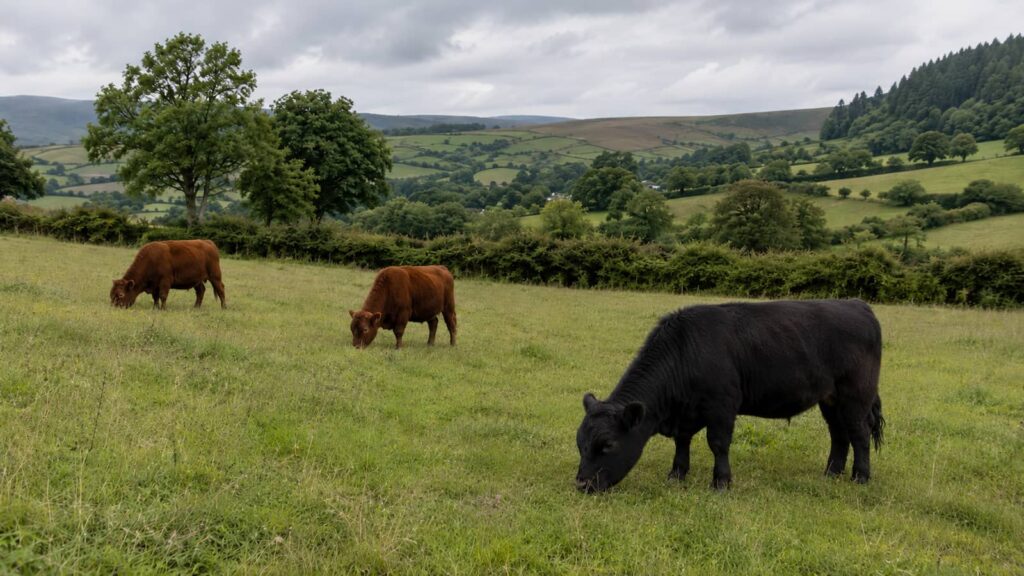
When I look across a field and see Dexter cattle grazing, I want to see more than animals simply consuming grass. I want to see cattle fitting into a healthy, functioning landscape. At One Dexter, that starts with a simple principle: the cattle should fit the land, rather than the land being pushed to support more cattle than it comfortably can.
That means paying attention to grass growth, soil conditions, the time of year and the needs of the cattle. It also means accepting that the right management will not look exactly the same on every field or throughout every season.
My aim is to use grazing in a way that produces healthy cattle while protecting and improving the land they depend upon.
Managing the land as a living system
Pasture is much more than a crop of grass waiting to be eaten.
A healthy field contains grasses, herbs, clovers and other plants above ground. Beneath them is an equally important world of roots, fungi, bacteria, insects and other soil organisms.
Cattle are part of that system too.
They remove vegetation through grazing, return nutrients through dung and urine, trample plant material onto the soil surface and influence which plants are able to compete. The way cattle are managed therefore has a direct effect on the land.
For me, the question is not simply how much grass a field can produce. It is how grazing can be managed so that cattle, plants and soil continue to function well together.
Stocking the land according to what it can support
One of the most important principles at One Dexter will be to avoid asking too much of the land.
Stocking rate needs to reflect the amount of forage actually available. It also needs to take account of soil type, rainfall, season and how well a field copes with livestock.
A stocking level that works well on productive summer pasture may be completely unsuitable for the same field during a wet Cumbrian winter.
For that reason, I do not want cattle numbers to dictate how the land has to be managed. Instead, the condition of the land should help determine how many animals it can reasonably carry.
Strip grazing with regular cattle moves
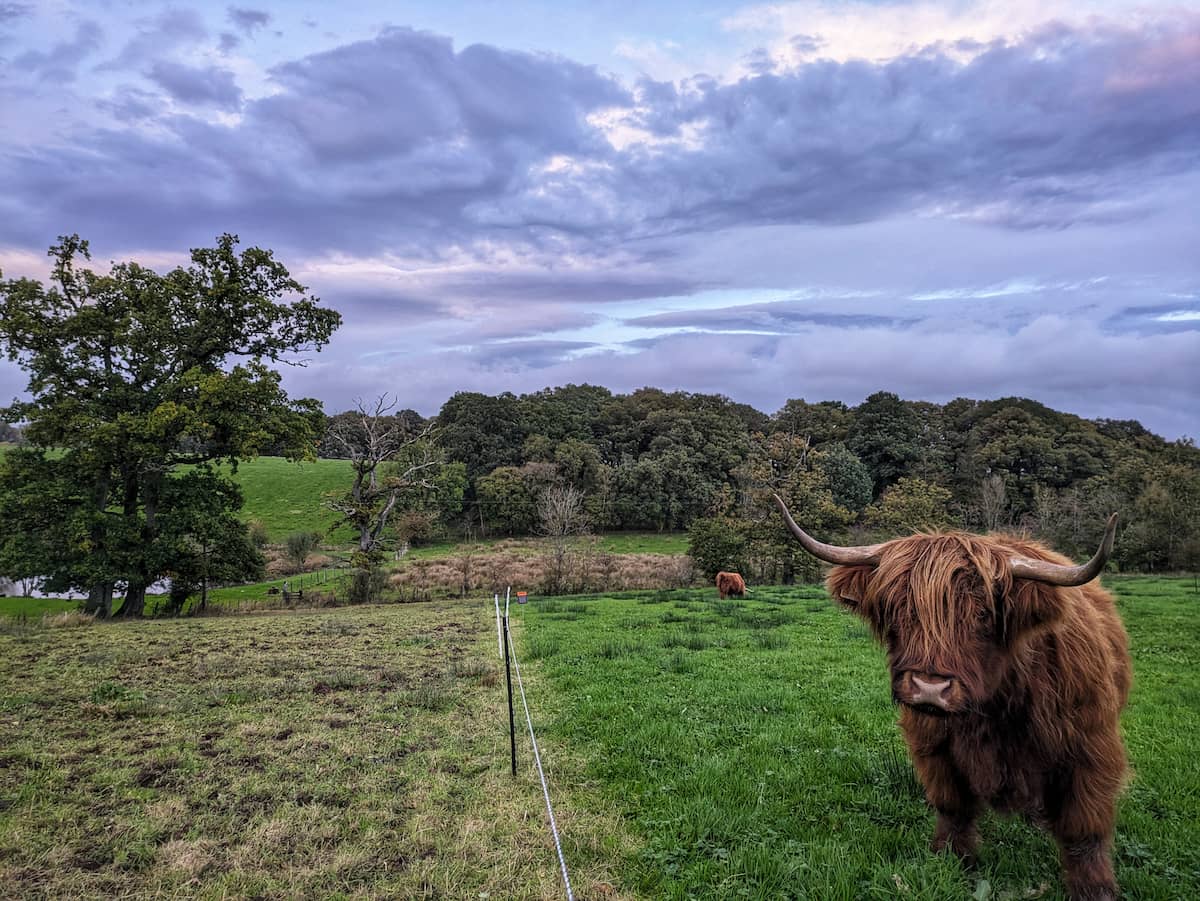
My preferred approach is strip grazing, using temporary electric fencing to divide a larger pasture into smaller grazing areas. This is a form of planned grazing often described as mob grazing.
When I talk about moving cattle regularly, I do not mean loading them into a trailer and transporting them from one field to another. In most cases, the cattle simply walk through a temporary electric fence onto the next section of the same pasture.
I typically move cattle onto fresh grazing every 24 to 48 hours. The size of each strip can be adjusted according to the amount of forage available, the number of cattle, the time of year and the conditions underfoot.
This concentrates grazing pressure for a relatively short period before the cattle move on. The grazed area can then be rested while the cattle continue through the pasture.
Regular moves also help prevent cattle from repeatedly returning to the freshest regrowth. Plants need time to rebuild their leaves and energy reserves before being grazed again.
The required recovery period is not fixed. During rapid spring growth, pasture may recover relatively quickly. Later in the year, recovery can take considerably longer. I would rather respond to what the pasture is doing than follow a rigid calendar.
High forage utilisation followed by recovery
I favour a high forage utilisation approach. Rather than deliberately leaving a large proportion of mature pasture standing, I want the cattle to make relatively full use of the forage available during each grazing period.
Smaller grazing areas and a relatively high concentration of cattle can encourage more even and less selective grazing. Instead of repeatedly choosing only their favourite plants, the cattle are encouraged to make better use of the sward as a whole.
I think this has benefits beyond simply making efficient use of forage.
Highly selective grazing can give plants that cattle repeatedly avoid a competitive advantage. Over time, species such as thistles, nettles, docks and soft rush (Juncus spp.) may be left standing while more palatable plants are repeatedly grazed.
More even utilisation can help reduce that imbalance. Less competitive plants, including many wildflowers, may also have a better opportunity to grow when taller and more dominant vegetation is prevented from continually overshadowing them.
Not every plant has to be eaten for the grazing event to have an effect. Plants that the cattle avoid may still be knocked down or trampled. This can be particularly useful with coarse or less desirable vegetation, while also returning plant material to the soil surface, where it feeds soil organisms, adds organic matter and can help improve soil structure and fertility as it breaks down.
Another benefit of concentrating cattle into smaller grazing areas is a more even distribution of dung and urine. Rather than nutrients being deposited mainly around water points or favourite resting areas, they are spread more widely across the pasture, helping return fertility more evenly to the soil.
It’s important to understand that high utilisation is not the same as overgrazing.
Once an area has been grazed, I want the cattle moved on and the pasture given sufficient time to recover before they return. The greater problem is not necessarily grazing a plant relatively hard once, but grazing its fresh regrowth repeatedly before it has had enough time to recover.
My aim is therefore to combine high forage utilisation during a short grazing period with adequate recovery afterwards.
Using deferred grazing where conditions allow
I am particularly interested in deferred grazing.
This involves allowing some pasture to grow during the main growing season and leaving it standing for cattle to graze later in the year.
Done well, this can reduce dependence on conserved forage such as hay or haylage. It also allows cattle to harvest more of their own food rather than having that forage mechanically cut, transported, stored and then fed back to them.
However, deferred grazing has to suit the land.
Some fields can carry cattle well into winter. Others become too wet and vulnerable to damage. Soil conditions therefore matter just as much as the amount of forage standing above ground.
Protecting soil during wet weather
Living and farming in Cumbria means taking rainfall seriously.
Cattle are heavy animals. If they remain on saturated ground for too long, their hooves can break up the soil surface and create severe poaching.
A small amount of hoof disturbance can sometimes create useful opportunities for seeds to germinate. Heavy and prolonged damage is different.
Regular cattle moves can be particularly useful during autumn and winter. By moving cattle onto a fresh strip every day or two, pressure is not continually concentrated on the same area for an extended period.
This does not eliminate the risk of poaching, especially in very wet conditions, but it gives me much greater control over where the cattle are grazing and how long they remain there.
The size of the grazing area can also be adjusted according to the conditions. If the ground is becoming vulnerable, the cattle can be moved sooner or given a different area.
There will still be situations where the responsible decision is to stop grazing particularly vulnerable land altogether. The grazing system has to respond to the soil as well as the amount of forage available.
Why Dexter cattle suit this approach
Breed choice is part of land management too.
I chose Dexters partly because they are small, hardy cattle capable of thriving on a forage-based diet. Their relatively modest size also makes them an attractive option for the kind of grazing system I want to develop.
They are not a substitute for good management. Any cattle can damage land if they are kept in the wrong place for too long.
However, I believe Dexters are particularly well suited to an extensive, 100% pasture-fed system where hardiness, efficiency and ease of management matter more than producing the largest possible animal.
Grazing for more than grass production
I also want the pasture at One Dexter to provide more than simply tonnes of forage.
Where circumstances allow, I would like to see diverse swards containing a mixture of grasses, herbs and flowering plants. That diversity can provide food and habitat for a much wider range of wildlife than a pasture dominated by only a few productive grass species.
Cattle can contribute to this in several ways. Their grazing influences vegetation structure, their hooves create small areas of disturbed ground where seeds may germinate, and their dung provides an important resource in its own right.
A cowpat is not simply waste. It can support dung beetles, flies and other invertebrates, which in turn provide food for birds, bats and other wildlife. As the dung breaks down, nutrients are also recycled back into the soil.
I also do not expect every part of the land to look identical. Different grazing histories, recovery periods, field margins, wetter areas and less accessible patches can all contribute to variation in vegetation height and structure across a holding.
For me, productive grazing and biodiversity do not have to be competing objectives. I want to produce good forage and healthy cattle while also managing land in a way that leaves room for a functioning and varied ecosystem.
Working with the character of each piece of land
There is no single grazing system that is right for every farm.
Some land may be productive permanent pasture. Some may be rough grazing, species-rich grassland or wood pasture. Fields can differ dramatically in drainage, aspect, vegetation and accessibility.
The management should reflect those differences.
A grazing plan that works perfectly on dry, free-draining ground might be completely inappropriate on heavier land nearby.
That is why observation is so important. Plans matter, but they should change when the cattle, weather or land tell you something different.
Looking after rented land
One Dexter will initially depend on rented land, so responsible management matters for another reason too.
Someone else’s land should be treated with the same care I would give my own.
Temporary electric fencing gives me considerable control over how cattle use a field without requiring permanent internal fencing across the whole pasture. Grazing areas can be altered as conditions change, while permanent boundaries, water supplies and other infrastructure can be managed in agreement with the landowner.
Responsible management also means keeping a close eye on ground conditions, livestock, water and fencing. It means communicating with the landowner and respecting any agreed restrictions or management objectives.
I am not interested in simply finding somewhere to put cattle.
I want to build long-term relationships with landowners where good grazing management benefits both sides.
A low-input system does not mean a low-management system
I ultimately want One Dexter to be a relatively low-input cattle system.
However, low input should not be confused with doing very little.
Strip grazing involves regular observation and frequent decisions. I need to judge how much forage to allocate, when to move the cattle, how quickly the pasture is recovering and whether changing weather or ground conditions require the plan to be altered.
Sometimes that means moving a fence after 24 hours. At other times, cattle may remain on a strip for closer to 48 hours. A field may need a longer recovery period than expected, or wet conditions may mean avoiding an area altogether.
The objective is not to intervene as little as possible. It is to intervene intelligently.
The principles behind Dexter cattle grazing at One Dexter
The details will inevitably evolve as One Dexter develops and as I learn the character of the land available to me. However, the underlying principles are unlikely to change.
- Match cattle numbers to what the land can reasonably support.
- Use temporary electric fencing to divide larger pastures into smaller grazing areas.
- Move cattle regularly, typically every 24 to 48 hours.
- Aim for high forage utilisation during each grazing period.
- Encourage more even and less selective grazing.
- Use grazing and trampling to influence coarse or less desirable vegetation.
- Give pasture adequate time to recover before cattle return.
- Avoid repeatedly grazing fresh regrowth before plants have recovered.
- Use deferred grazing where the land and weather make it practical.
- Use regular moves to help reduce prolonged poaching pressure during wet weather.
- Let the characteristics and condition of each field determine how it is managed.
- Look after rented land as carefully as land I owned myself.
- Put cattle welfare and long-term land health ahead of maximum short-term output.
Ultimately, I want One Dexter to produce excellent beef because the cattle have been well managed on healthy land, not in spite of the way that land has been treated.
For me, that is what good grazing management should achieve.