
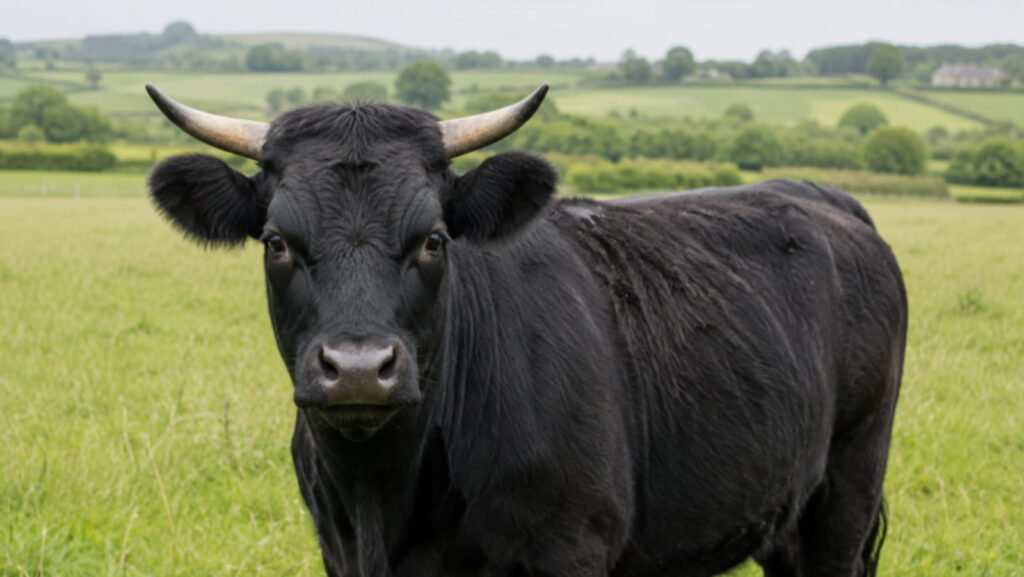
Most people know surprisingly little about the beef they eat.
You might know the breed. You might know the farm. You might know that it was grass-fed, locally produced or raised to a particular standard. But once an animal enters the conventional beef supply chain, its individual identity usually disappears.
At One Dexter, I think there is value in doing things differently.
I want people to be able to know exactly which animal their beef came from — not simply which farm, herd or region.
Provenance at the level of the individual animal
Traceability is often discussed in terms of food safety and regulation. For me, it means something more.
Imagine knowing the animal’s identity from the beginning.
You could know where it was born, who its dam and sire were, where it grazed, what it ate and how it was managed throughout its life. You could see photographs and videos as it grew and follow the landscapes it grazed through the seasons.
If veterinary treatment was ever necessary, you could know that too.
Rather than provenance ending with the name of a farm on a packet, the story of the beef would remain connected to one identifiable animal.
Taking responsibility for eating meat
There is an uncomfortable reality behind every piece of beef: an animal had to die for it.
Modern food systems can make that remarkably easy to forget.
I don’t think the answer is to disguise that reality. I think there is something valuable about acknowledging it.
For someone who chooses to eat beef, knowing which individual animal it came from can give that decision greater weight.
You know that this was a real animal. You know how it lived. You know the land it grazed. And when you eventually eat the beef, you understand exactly where it came from.
For me, that represents a more responsible relationship with meat.
A good life comes first
Knowing the identity of an animal would mean very little if its life were not worth knowing about.
That is why the way the cattle live matters so much.
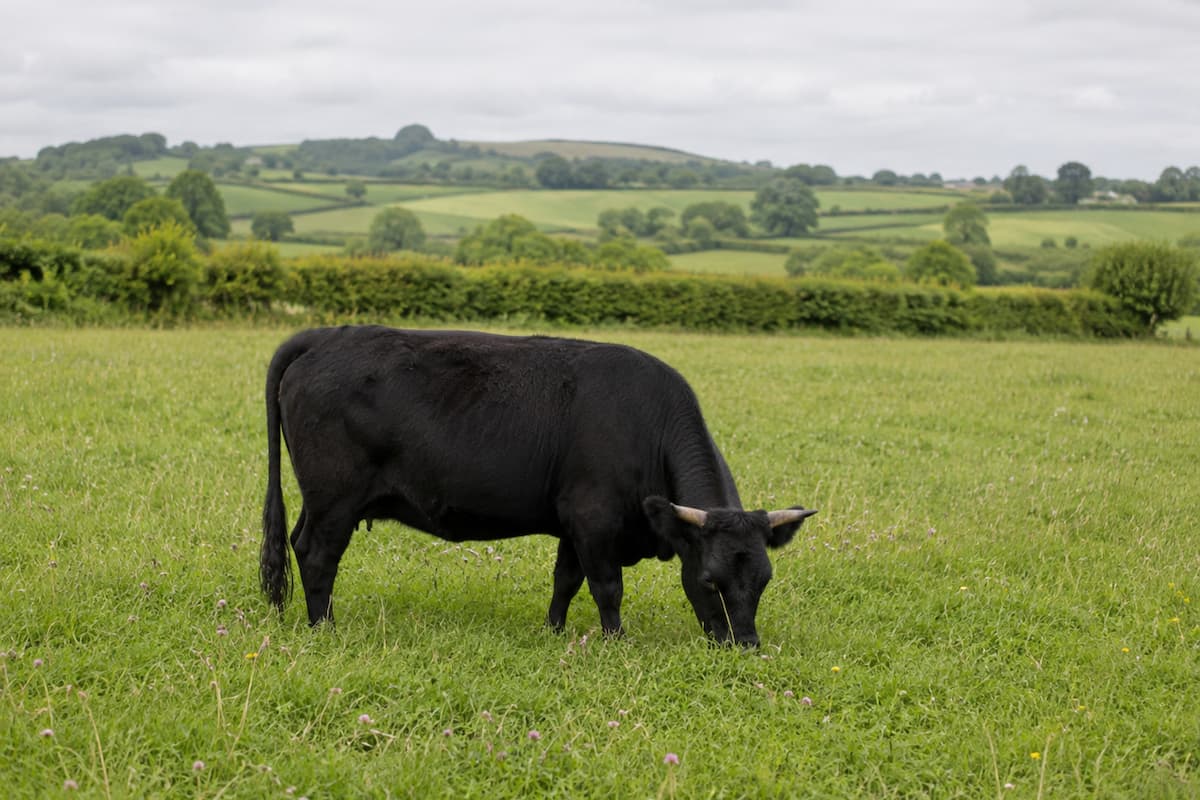
My aim is for One Dexter cattle to spend their lives grazing pasture and diverse forage, living outdoors and expressing natural cattle behaviour as far as practically possible, while fulfilling the important ecological role that cattle and other large herbivores can play in shaping healthy, diverse landscapes.
They should have space to move, opportunities to browse and graze, social contact with other cattle and management that works with their biology rather than against it.
The individual-animal model makes those claims unusually transparent.
Instead of simply saying that the cattle are well cared for, I want customers to be able to see how a particular animal is actually living.
Why Dexter cattle make this particularly meaningful
Dexters are especially well suited to this approach.
They are a small, hardy cattle breed with a long history of thriving on grass and forage, making them particularly well suited to extensive, pasture-led grazing systems.
The Dexter Cattle Society describes the Dexter as the smallest native cattle breed in the British Isles and highlights its hardiness, beef quality and suitability for conservation grazing.
But there is another advantage for the One Dexter model.
A Dexter produces a more manageable quantity of beef than many larger commercial cattle breeds. That makes it much more realistic to preserve the connection between one individual animal and the household that ultimately eats it.
Rather than beef from numerous animals becoming anonymous cuts within a supply chain, one Dexter can remain one Dexter.
From pasture to freezer
The idea behind One Dexter is simple.
Customers will be able to reserve the beef from a particular pedigree Dexter and follow that animal during its life.
They will know its identity and history. They will receive updates as it grows. They will see where it is grazing and learn about the decisions I make around its management.
When the animal has naturally reached maturity, the beef will come from that same Dexter.
Nothing magical happens simply because you know the animal.
But something important may happen to the way you think about meat.
The distance between animal, land, farmer and food becomes much smaller.
Beef with nothing hidden
One Dexter is built around a simple question:
If you choose to eat beef, wouldn’t you rather know exactly which animal it came from?
I think some people will.
And for those people, I want to create a level of beef provenance that goes far beyond a breed name or farm label.
One animal. One known life. One completely traceable source of beef.