
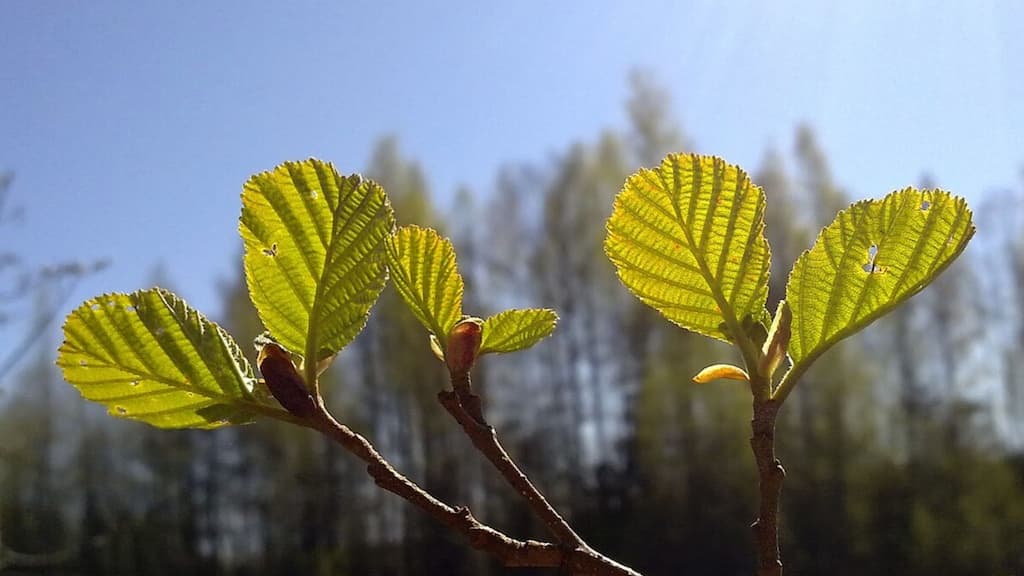
We’ve recently been planting native willow and alder trees on grazing land alongside a beck at the foot of Blencathra in the Lake District.
These trees are part of our long-term vision for One Dexter: developing a low-input, pasture-based cattle farming system where healthy livestock, diverse vegetation and thriving wildlife all have their place.
We’re particularly interested in the role trees can play within grazing systems, not just as habitat for wildlife, but as sources of natural browse, shelter and potentially valuable nutrients and phytochemicals.
Why Plant Trees on Grazing Land?
Species-rich grassland is an important habitat in its own right, so our intention isn’t to turn every pasture into woodland. Instead, we’re looking to introduce native trees in carefully selected locations where they can enhance biodiversity, protect watercourses and contribute to a more resilient grazing landscape.
We’ve concentrated much of our planting alongside a beck, where willow and alder are particularly well suited to the damp conditions. As their root systems develop, they’ll help bind the soil together, stabilising the banks and reducing erosion. This is especially important during periods of heavy rainfall, when eroded soil can enter watercourses as sediment, potentially affecting aquatic habitats and water quality.
Trees and the vegetation surrounding them can also act as riparian buffers, intercepting sediment and nutrients carried by surface runoff before they reach the water. As the trees mature, their canopies will provide shade, helping to moderate summer water temperatures. This can be particularly beneficial for temperature-sensitive freshwater species, including trout and many aquatic invertebrates.
Fallen leaves and other organic material provide another important ecological function. Once they enter the beck, they become part of the aquatic food web, supporting fungi, microorganisms and detritivorous invertebrates. These organisms help break down the organic material and, in turn, provide food for fish and other wildlife.
Willow is particularly valuable for biodiversity, supporting an impressive diversity of invertebrates, including numerous moth and butterfly species whose caterpillars feed on its foliage. Its early-flowering catkins provide nectar and pollen for emerging bees and other pollinators, particularly at a time of year when relatively few other plants are flowering.
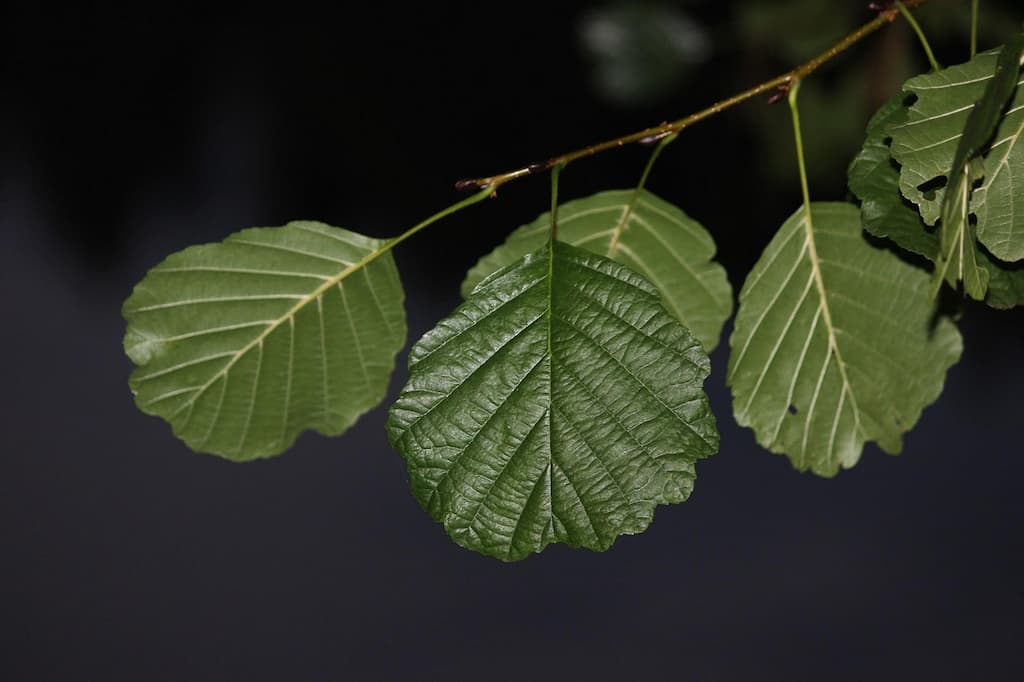
Alder supports its own community of specialist insects, including moths such as the alder kitten and pebble hook-tip, whose caterpillars feed on its leaves. Its seeds also provide food for several species of finch. However, one of alder’s most remarkable ecological characteristics lies beneath the ground.
Alder and Nitrogen Fixation
Unlike most trees, alder can form a symbiotic relationship with a nitrogen-fixing bacterium called Frankia alni. These bacteria inhabit specialised nodules on the tree’s roots, where they convert atmospheric nitrogen into ammonia, a form of nitrogen that can be incorporated into compounds essential for plant growth.
This process is known as biological nitrogen fixation. It requires considerable energy, which the bacteria receive from carbohydrates produced by the tree through photosynthesis. In return, the bacteria supply nitrogen that the alder can use to synthesise proteins and other essential molecules.
This relationship enables alder to establish and grow in soils where available nitrogen might otherwise limit plant growth.
It can also influence nutrient cycling within the surrounding ecosystem. Nitrogen accumulated in the tree’s tissues eventually enters the soil through fallen leaves, dead roots and other organic material. As soil organisms decompose this material, some of the nitrogen becomes available for uptake by other plants.
However, this doesn’t mean alder automatically fertilises an entire pasture. The extent to which neighbouring vegetation benefits depends on factors such as soil conditions, decomposition rates and the movement of nutrients through the ecosystem.
Beyond these ecological functions, established trees can provide shelter from wind and driving rain, as well as shade during warmer weather. For cattle living outdoors throughout the year, these features can improve the grazing environment and provide opportunities to seek shelter according to changing conditions.
Natural Browse: More Than Just Grass
One of the most interesting benefits of planting trees on grazing land is the opportunity they provide for natural browsing.
Cattle are primarily grazers, with a digestive system adapted to extracting nutrients from fibrous vegetation through microbial fermentation in the rumen. However, their natural diet needn’t consist exclusively of grasses. Given the opportunity, cattle may also consume leaves, young shoots and other suitable woody vegetation.
Tree browse can differ considerably from pasture grasses in its nutritional composition. Concentrations of minerals, protein and other compounds vary between tree species, growing locations, seasons and even different parts of the same plant.
This variation is particularly interesting because grazing animals require more than sufficient energy and protein. Their diets must also provide essential macro- and trace minerals, which support everything from skeletal development and enzyme activity to reproduction and immune function.
What Does the Research Tell Us?
A 2019 Woodland Trust research briefing on tree leaves as supplementary livestock feed, by Kendall and colleagues, investigated the nutritional composition of willow, alder and oak leaves collected from three locations in the UK.
The researchers analysed mineral concentrations alongside energy and protein content, revealing some interesting differences between the species.
Willow leaves from all three sampling locations contained concentrations of zinc and cobalt above the dietary requirements used for comparison in sheep. These findings suggest that willow could provide a useful supplementary source of certain trace minerals for ruminant livestock.
Zinc is involved in numerous physiological processes, including enzyme function, immune responses and tissue maintenance. Cobalt is equally interesting because rumen microorganisms use it to synthesise vitamin B12, which plays an essential role in energy metabolism.
The study also found that alder leaves had the highest metabolisable energy values of the three species sampled, while crude protein concentrations tended to be higher during spring.
However, mineral composition isn’t the same as mineral availability. The extent to which animals can digest and absorb nutrients depends on several factors, including interactions with other dietary components and the presence of compounds that may influence nutrient utilisation.
The researchers therefore highlighted the need for further investigation into how tree fodder can be incorporated into livestock diets under practical farming conditions.
For One Dexter, the findings support an interesting possibility: that access to suitable tree browse could complement diverse pasture vegetation by offering nutrients in different proportions and at different times of year.
We don’t see browse as a replacement for good-quality pasture. Rather, we’re interested in providing cattle with access to a wider variety of natural forage, allowing trees and grassland to fulfil complementary roles within the grazing system.
Phytochemicals and Animal Health
The potential value of natural browse extends beyond conventional nutrients such as protein, energy and minerals.
Plants produce an enormous diversity of chemical compounds involved in defence, communication and responses to environmental stresses. Many of these substances are known as secondary metabolites, or phytochemicals.
Unlike essential nutrients, phytochemicals aren’t necessarily required for normal animal metabolism. Nevertheless, some can influence digestion, microbial activity and other physiological processes when consumed.
Among the compounds of particular interest in ruminant nutrition are salicylates, flavonoids, polyphenols and tannins.
Willow, Salicin and Anti-inflammatory Compounds
Willow has a long history of medicinal use, largely associated with compounds found in its bark.
One of the best known is salicin, a naturally occurring salicylate glycoside that can be metabolised into salicylate derivatives, including salicylic acid. However, the biological activity of willow cannot be explained by salicin alone.
In their 2011 paper, Willow Species and Aspirin: Different Mechanism of Actions, Vlachojannis, Magora and Chrubasik discussed how willow bark contains multiple biologically active compounds, including flavonoids and polyphenols, which contribute to its anti-inflammatory activity.
They also highlighted an important distinction between willow preparations and aspirin. The amounts of salicin typically provided by willow bark preparations are insufficient to explain their reported effects through salicylic acid alone. Other compounds and mechanisms appear to contribute.
This makes willow an interesting example of how plants contain complex mixtures of substances whose combined biological activity may differ from that of any individual compound.
However, it’s important to distinguish research into concentrated willow bark extracts from the effects of cattle naturally browsing willow foliage. The concentrations consumed, their bioavailability and their physiological effects may be very different.
We therefore cannot assume that cattle browsing willow receive a clinically meaningful anti-inflammatory benefit. Nevertheless, the chemistry of willow illustrates why tree leaves and other natural forage plants deserve investigation beyond their basic nutritional composition.
Condensed Tannins and Gastrointestinal Parasites
Another particularly interesting group of plant compounds is the tannins, which occur in many trees, shrubs and herbaceous plants.
Tannins are polyphenolic compounds with the ability to bind proteins and other molecules. One important group, known as condensed tannins, has attracted considerable research interest because of its effects on ruminant digestion and gastrointestinal parasites.
Within the rumen, certain condensed tannins can bind to dietary proteins, reducing their breakdown by rumen microorganisms. Under suitable conditions, some of these complexes dissociate further along the digestive tract, potentially increasing the quantity of dietary protein available for absorption in the small intestine.
However, the relationship is far from straightforward. The effects depend on tannin concentration, molecular structure and the wider composition of the diet. At excessive concentrations, tannins can reduce palatability, feed intake and nutrient digestibility.
There is also evidence that certain condensed tannins can affect gastrointestinal nematodes, the parasitic worms responsible for important production and health problems in grazing ruminants.
Depending on the particular compounds and parasite species, tannins may interfere with processes such as larval development, egg hatching and adult worm reproduction. Some effects may be direct, while others may result from improved protein nutrition supporting the animal’s immune response.
A 2019 review by Mueller-Harvey and colleagues examined the benefits of condensed tannins in forage legumes fed to ruminants. The authors emphasised the importance of tannin structure, concentration and diet composition in determining animal responses.
Much of this research involves tannin-rich forage legumes, often in sheep and goats. It would therefore be premature to assume that browsing willow or alder will produce comparable effects in cattle.
Nevertheless, it raises a valuable question about the relationship between botanical diversity and livestock health. Could access to a wider range of suitable forage plants provide compounds that help support animal resilience, alongside good nutrition and appropriate grazing management?
It’s an area of research we find particularly interesting, although natural browse should not be regarded as a proven substitute for parasite monitoring or veterinary treatment when required.
Building Resilient Grazing Landscapes
At One Dexter, our ambition is to develop a hardy, low-input herd of pedigree Dexter cattle capable of thriving outdoors on pasture and natural forage throughout the year.
Achieving this requires more than selecting animals with the right characteristics. It also means establishing a grazing environment that supports their nutritional needs while maintaining the ecological processes upon which productive grasslands depend.
Our approach to cattle grazing and land management involves carefully managed rotational grazing, with livestock moved between grazing areas to allow vegetation sufficient time to recover.
Following defoliation, plants depend on their remaining leaf area and stored carbohydrates to support regrowth. Allowing appropriate recovery periods enables them to rebuild photosynthetic capacity and maintain the root systems needed for water and nutrient uptake.
However, recovery rates vary considerably with temperature, rainfall, soil conditions, plant species and the severity of grazing. There is no single rest period that is appropriate throughout the year.
We’re particularly interested in maintaining species-rich pasture, where grasses, legumes and other flowering plants contribute different rooting patterns, growth characteristics and ecological functions.
Integrating Trees on Grazing Land
Integrating trees on grazing land is known as silvopastoral agroforestry, or silvopasture. This broad approach encompasses several forms of land management, including traditional wood pasture, where scattered trees, scrub and grassland form a mosaic maintained through grazing.
In these systems, trees and pasture are managed together rather than treated as entirely separate land uses. Depending on their species and arrangement, trees can contribute shelter, shade, browse, organic matter and habitat diversity.
Their roots can also influence soil structure, water movement and nutrient cycling. As leaves and fine roots die and decompose, they provide organic material for soil organisms, contributing to the biological processes that help maintain soil fertility.
Nevertheless, trees and pasture plants can compete for light, water and nutrients. The balance between beneficial interactions and competition depends on tree density, species selection, soil conditions and management.
This is why we favour carefully positioned trees rather than indiscriminate planting. Along watercourses and suitable field boundaries, native trees can provide ecological benefits while allowing the majority of the pasture to remain open and productive.
Young trees also need protection while they establish. Livestock can damage saplings through browsing, rubbing and trampling, so we’ll need to manage access until the trees are sufficiently robust.
As they mature, suitable trees may eventually become part of the cattle’s browsing environment, adding another dimension to the forage available within the grazing system.
Small Beginnings, Long-Term Benefits
This tree-planting project was carried out in collaboration with The Fringe And The Fold, which also supports nature-friendly land and livestock management and wildlife conservation.
It’s satisfying to give these little trees a new home on grazing land where they can contribute to the health of the pasture for years to come.
Of course, the benefits we’ve discussed won’t materialise overnight. Streambank stabilisation, habitat development and opportunities for browse will depend on successful establishment and years of growth.
Our ambition is to develop grazing systems that become more ecologically diverse and resilient over time, supporting healthy cattle while allowing soils, vegetation and wildlife to flourish.
These saplings are a small contribution towards that long-term goal.