
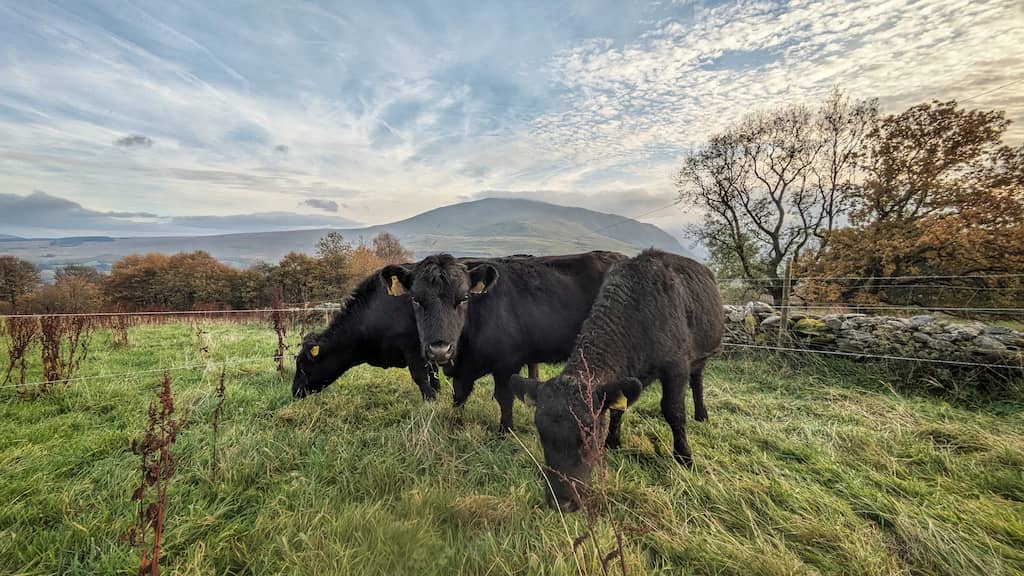
Our first three pedigree Dexter cattle have arrived in Cumbria, marking a major milestone for One Dexter. After a journey across the Irish Sea from Northern Ireland, Poinsettia, Pocahantus and Patsy have reached their new home on the slopes beneath Blencathra.
These three young heifers are the foundation of our future herd. Their arrival represents the beginning of something I’ve been longing to do for a long time: raise hardy, healthy cattle outdoors, entirely on pasture and forage, while working in harmony with nature.
Why We Chose Ballyboley Dexters
Finding the right foundation animals was never simply about buying three pedigree Dexters. Just as important was finding cattle that had been raised in a way that reflected our own farming principles.
We could have purchased Dexter heifers much closer to home, here in Cumbria, for a fraction of the cost. However, many of the cattle available to us had been raised in more conventional farming systems, involving routine vaccinations and worming treatments, supplementary concentrate feeds and winter housing.
These practices are common in livestock farming, but they aren’t the approach we want to pursue at One Dexter.
Instead, we wanted cattle that had grown up outdoors, grazing a natural diet of grasses, herbs and wildflowers. We also wanted animals from a herd managed with minimal intervention, where natural resilience, sound genetics and careful observation take priority over routine pharmaceutical treatments.
That’s what led us to Ballyboley Dexters, the Alexander family’s pedigree herd at Orlock Farm in County Down, Northern Ireland.
Farming in Harmony With Nature
The Alexander family’s approach to farming closely reflects the principles behind One Dexter. Their cattle are raised outdoors throughout the year, on a 100% pasture-and-forage-based diet, without routine vaccinations, antibiotics or worming treatments.
Ballyboley is a Pasture for Life certified farm. Its cattle graze diverse pastures and browse hedgerows, while conserved grass provides additional forage during the winter months. Grain, soya and concentrate feeds have no place in their diet.
The herd is also managed as a closed herd, with a strong emphasis on biosecurity, animal health and careful selection of breeding stock.
Beyond the cattle themselves, the Alexanders recognise the importance of healthy soils, wildlife habitats and biodiversity. Their conservation grazing practices are designed to support the landscape rather than simply maximise production.
Their achievements have also received recognition. Stephen Alexander was named Farming Life’s Nature Friendly Farmer of the Year in 2021, while Ballyboley has earned numerous awards for its pedigree cattle and pasture-fed beef.
What appeals to us most, though, isn’t the awards. It’s the philosophy behind them: producing food while caring for the animals, the land and the wider natural environment.
This is also central to our own approach to grazing and land management
Three Heifers, One New Beginning
Our three new arrivals are Ballyboley Poinsettia, Ballyboley Pocahantus and Ballyboley Patsy. All three are black, non-short-legged, pedigree-registered Dexter heifers.
Poinsettia, born in June 2025, is the eldest. Pocahantus and Patsy were both born in October 2025 and are half sisters, sharing the same sire, Plezica Charlie.
The heifers come from established Ballyboley bloodlines, where breeding females are selected for qualities such as quiet temperaments, easy calving and the ability to thrive on pasture.
We want to carry these qualities forward as our herd develops. Our aim is to raise Dexter cattle in Cumbria that are hardy, structurally sound, good-natured and naturally suited to thriving outdoors year-round on a low-input, pasture-based system.
You can meet each of our foundation females, see their photographs and explore their ancestry on our Meet the Herd page.
Across the Irish Sea to the Cumbrian Fells
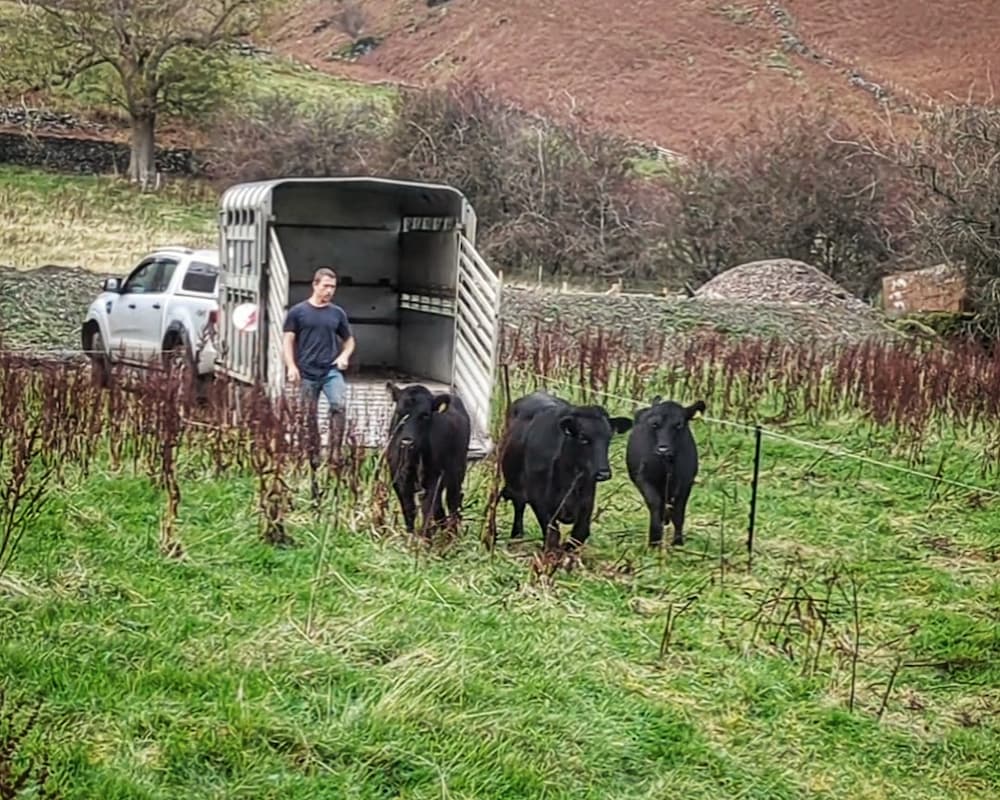
Bringing three young cattle from Northern Ireland to Cumbria required considerably more planning than buying animals locally.
Their journey began at Orlock Farm, overlooking the Irish Sea, before taking them across the water to Scotland and onwards to northern England.
At the other end of their journey awaited an entirely different landscape: the steep slopes beneath Blencathra, in the northern Lake District.
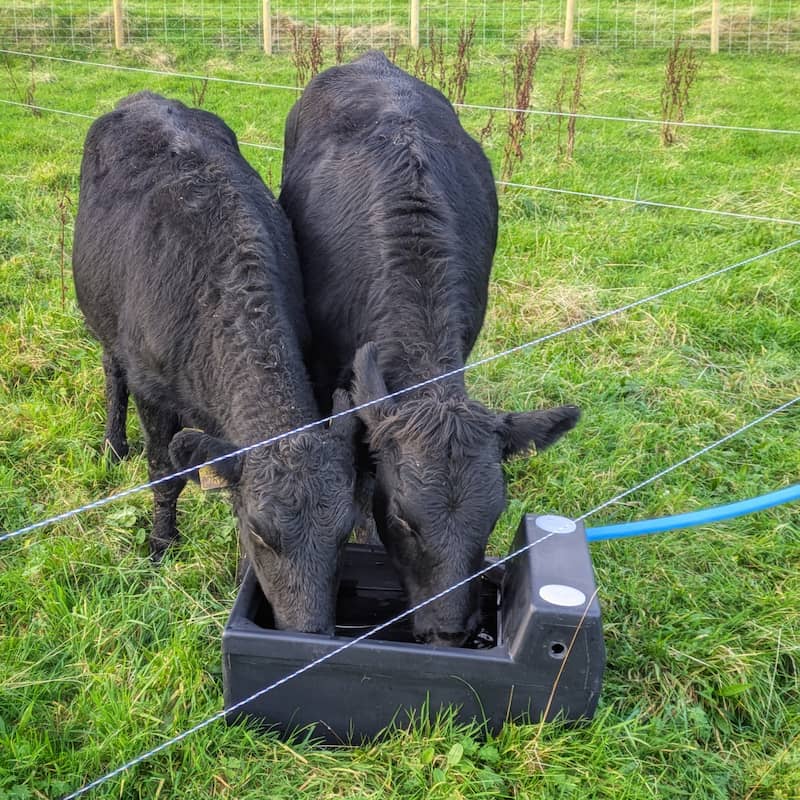
Here, the heifers will graze species-rich grassland as part of a carefully managed rotational grazing system. We’ll move them regularly between grazing areas, allowing vegetation time to recover while adapting our approach to the weather, ground conditions and available forage.
Our aim is to create a farming system in which the cattle and the surrounding ecosystem can flourish together.
A Heartfelt Thank You
We’d like to express our sincere thanks to the Alexander family, particularly Stephen and his daughter Hannah, for their help organising the journey across the Irish Sea.
It’s a real pleasure to begin One Dexter with animals from a family whose values and approach to farming are so closely aligned with our own.
Looking Ahead: The Future of Our Dexter Cattle in Cumbria
For now, our priority is giving Poinsettia, Pocahantus and Patsy time to settle into their new surroundings, become familiar with us and adjust to the Cumbrian landscape.
In time, we hope these three heifers will become the mothers of the next generation of One Dexter cattle.
We’re starting small, but with a clear sense of purpose. Every decision, from selecting our first animals to managing the land they graze, is guided by our commitment to animal welfare, natural resilience and farming in harmony with nature.
We’ll be sharing their progress as the herd grows.